A pre-IND checklist should focus on the specific FDA feedback that could change the development program. Before requesting an interaction, identify the questions, evidence already available, key gaps, and who will own the decisions after FDA responds.
Quick answer: what should be ready before engaging FDA?
- Product and regulatory classification assumptions.
- Development objective and proposed first clinical study.
- CMC readiness and known phase-appropriate gaps.
- Nonclinical program, exposure margins, and unresolved findings.
- Starting dose and dose-escalation rationale.
- Specific questions where FDA feedback can change the plan.
- Clear sponsor position and preferred option for each question.
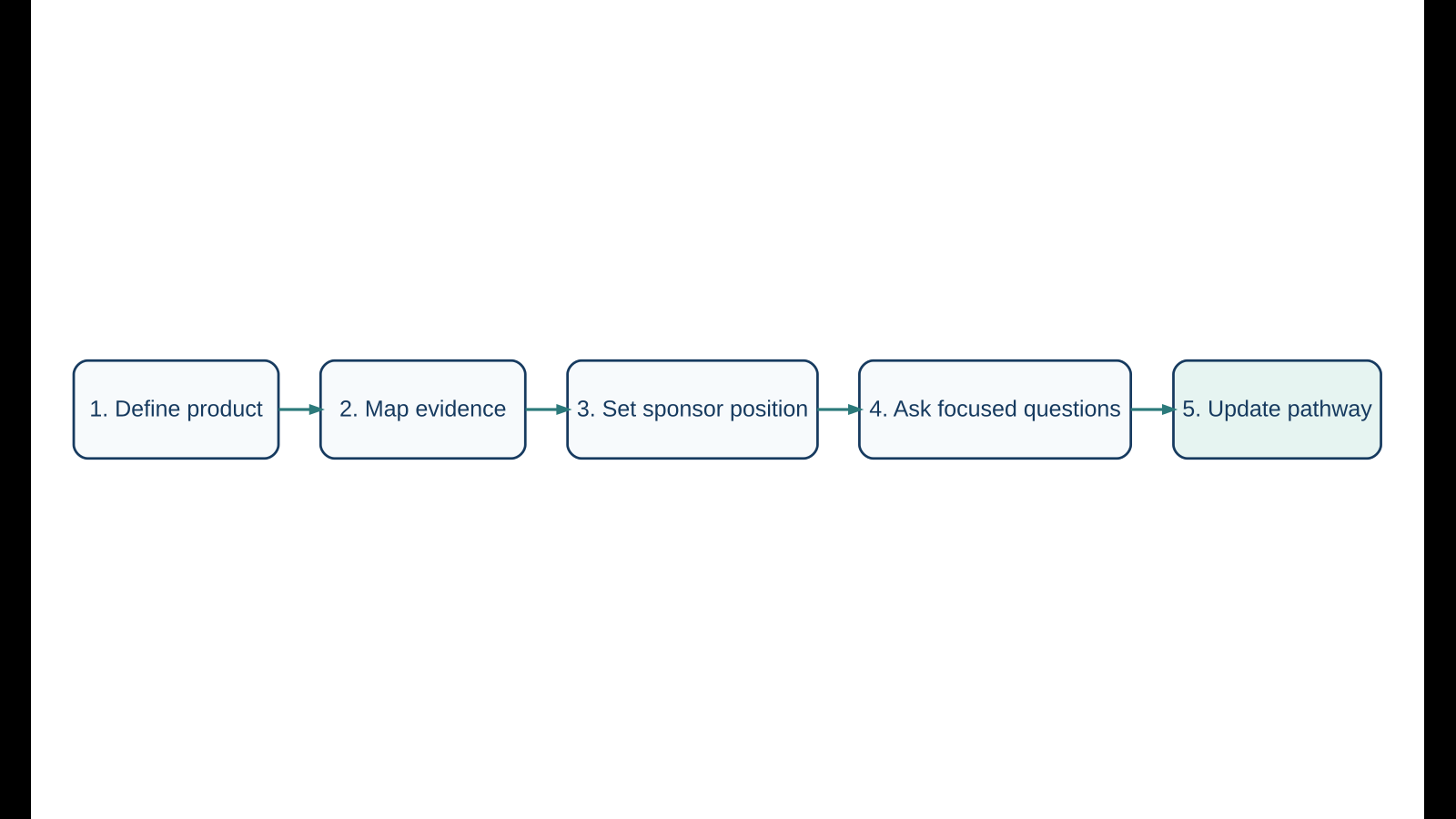
1. Define the decision you need from FDA
Avoid broad questions such as “Does FDA agree with our program?” Break the program into decisions: nonclinical sufficiency, CMC expectations, starting dose, protocol design, safety monitoring, or the evidence needed before IND submission.
For sponsors that need hands-on support applying this framework, BioBoston CRO Regulatory Pathway can support the underlying regulatory and cross-functional work.
2. Confirm the meeting pathway and timing
For CDER/CBER drug and biologic development, a pre-IND meeting is generally a Type B meeting under FDA’s current formal-meetings framework. Use the August 2026 final guidance and the relevant review division’s instructions when preparing the request and package.
3. Build the evidence map
| Workstream | What FDA needs to understand |
|---|---|
| Product / CMC | What is being administered and how quality will be controlled for the clinical phase |
| Nonclinical | What supports human exposure and what risks remain |
| Clinical pharmacology | How starting dose and escalation logic are justified |
| Clinical | Population, objectives, endpoints, dose/safety rules, monitoring |
| Regulatory | Pathway assumptions, prior interactions, specific development questions |
4. Use question quality criteria
- One decision per question when possible.
- State the sponsor’s position before asking for agreement.
- Provide enough evidence to answer without reconstructing the program.
- Avoid asking FDA to choose between poorly developed options.
- Identify the consequence of a “no” answer before the meeting.
5. Red flags
- Questions are drafted before the sponsor has a position.
- Critical source reports will not be available by the package date.
- Different functions use different versions of the first-in-human protocol concept.
- CMC, nonclinical, and clinical exposure assumptions do not align.
- The team is asking FDA to resolve internal governance disputes.
Pre-IND readiness gate
- Decision questions prioritized.
- Source evidence controlled.
- Cross-functional positions aligned.
- Meeting type and division instructions confirmed.
- Briefing package owners and review calendar defined.
- IND content plan updated for possible FDA outcomes.
BioBoston CRO Regulatory Pathway support can help frame early FDA questions and connect the interaction to the broader development route.