ind submission planning checklist planning should help the sponsor make a controlled decision, not merely create another document. A first-time sponsor IND planning checklist covering regulatory strategy, CMC, nonclinical, clinical, forms, authoring, publishing, and go/no-go controls.
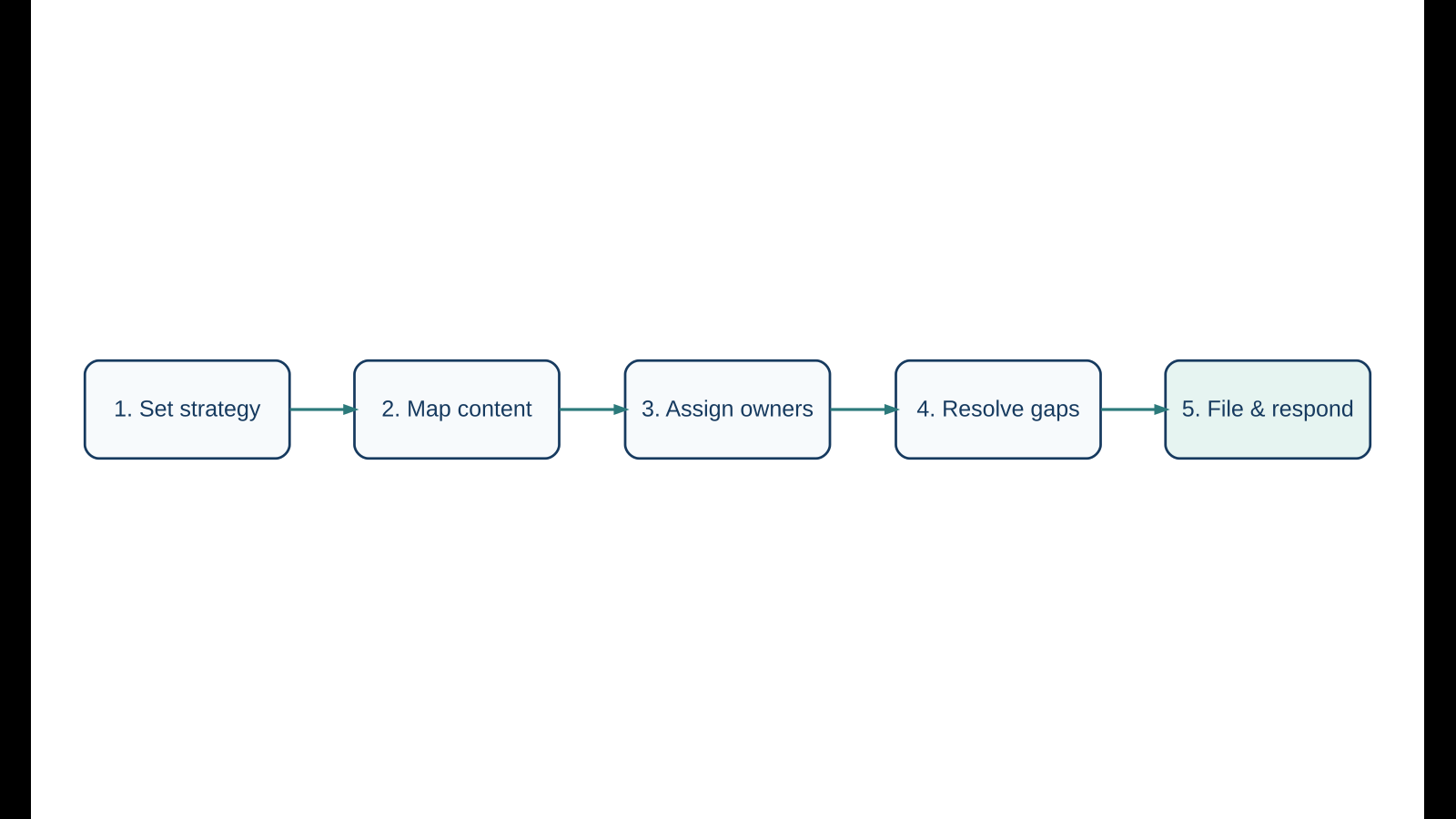
Quick answer: what should a first-time sponsor plan?
- Regulatory objective and FDA interaction history.
- Application content map and owners.
- CMC, nonclinical, and clinical source readiness.
- Investigator’s Brochure and protocol readiness.
- Required forms and administrative content.
- Authoring, review, QC, and publishing sequence.
- Submission validation and post-filing response ownership.
1. Confirm the regulatory planning basis
| Planning field | Question |
|---|---|
| Product and indication | What exactly is entering clinical investigation? |
| FDA division / interaction | What feedback or commitments must be reflected? |
| Target study | Which protocol and population does the IND support? |
| Target filing date | What evidence and decision assumptions make the date credible? |
2. Build a content inventory by workstream
| Workstream | Examples of readiness controls |
|---|---|
| Administrative | Cover letter, forms, commitments, environmental or other applicable statements |
| CMC | Drug substance/product information, manufacturing, specifications, analytical methods, stability appropriate to phase |
| Nonclinical | Pharmacology/toxicology reports and integrated rationale supporting clinical exposure |
| Clinical | Protocol, IB, prior human experience if any, safety monitoring and risk controls |
| Publishing | eCTD structure, file readiness, hyperlinks/bookmarks, validation and transmission plan |
3. Assign one owner and one reviewer per document
Do not use “Regulatory” or “Clinical” as owner names. Assign an accountable individual or role, the source inputs required, first-draft date, cross-functional review date, QC date, approval date, and publishing handoff.
For sponsors that need hands-on support applying this framework, BioBoston CRO Submission Planning can support the underlying regulatory and cross-functional work.
4. Manage dependencies explicitly
- Protocol assumptions depend on CMC and nonclinical evidence.
- IB risk language depends on current nonclinical and any human safety data.
- Forms depend on final investigator, site, and sponsor information.
- Publishing cannot recover a content package that is still changing materially.
- Meeting commitments or FDA feedback should be mapped to the affected sections.
5. Use a readiness gate before final publishing
| Gate | Go criterion |
|---|---|
| Evidence | Critical source reports/data available and controlled |
| Content | Required documents materially complete |
| Review | Substantive cross-functional comments resolved |
| Regulatory | Open questions do not invalidate the filing strategy |
| Publishing | Files meet technical requirements and validation plan is ready |
6. After submission
An IND generally becomes effective 30 days after FDA receives it unless FDA places the study on clinical hold or notifies the sponsor earlier that the investigation may proceed. Filing readiness should therefore include ownership for FDA questions and clinical-hold prevention, not only transmission.
BioBoston CRO Submission Planning can help convert the regulatory strategy into a controlled IND content and readiness plan.