integrated analysis clinical trials planning should help the sponsor make a controlled decision, not merely create another document. A practical framework for evaluating cross-study consistency in integrated safety and efficacy summaries without forcing unlike studies into one pooled story.
Quick answer: what should be compared across studies?
- Population and eligibility.
- Dose, regimen, exposure, and treatment duration.
- Endpoint or safety-event definitions.
- Assessment methods and schedules.
- Follow-up duration and data cutoffs.
- Coding and analysis conventions.
- Operational changes that could affect data quality.
- Magnitude, direction, and uncertainty of findings.
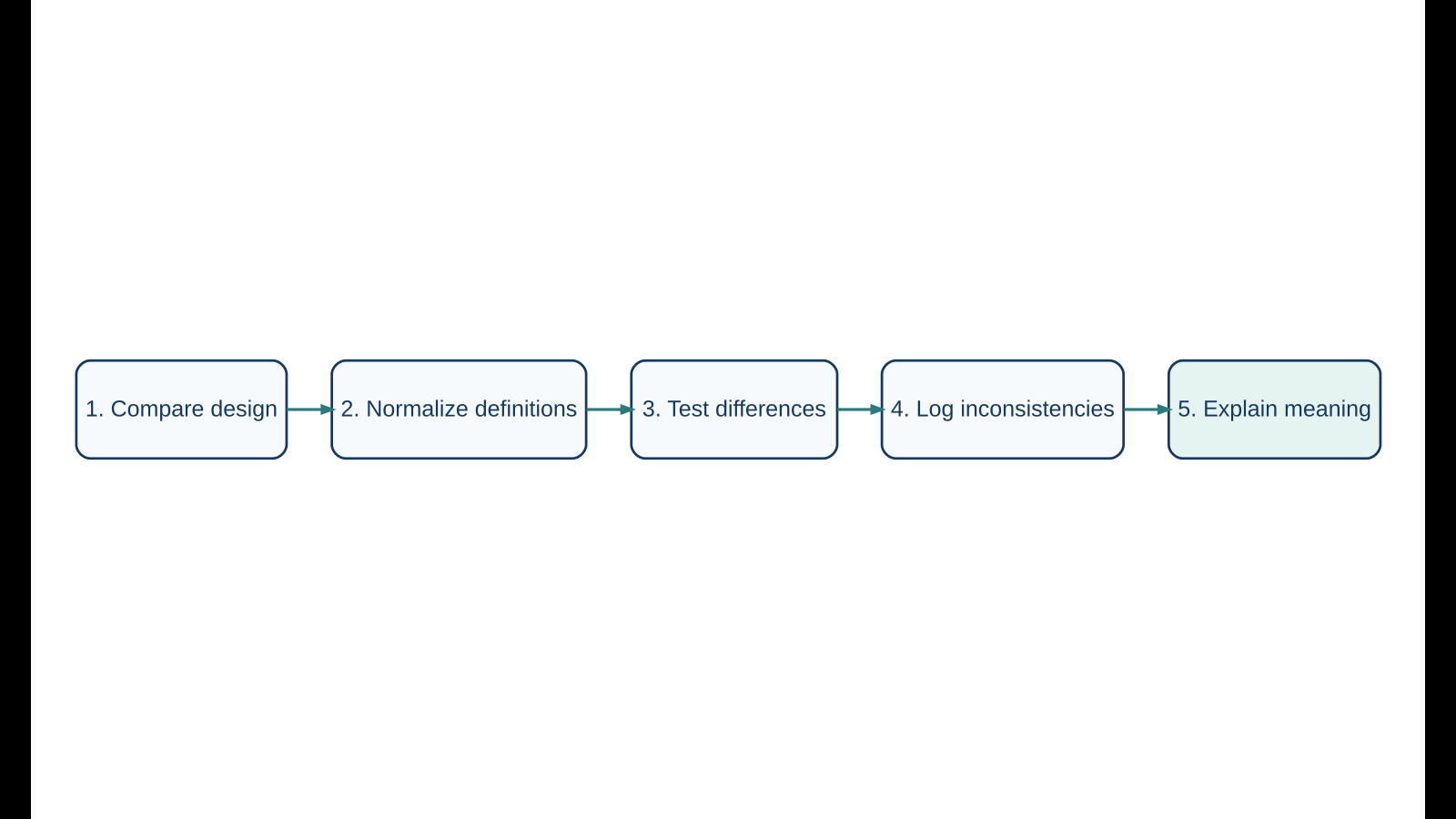
1. Separate structural differences from outcome differences
| Difference type | Example | Response |
|---|---|---|
| Structural | Different population or dose | Document and decide whether direct comparison is appropriate |
| Analytical | Different endpoint handling or coding | Harmonize where justified or explain why not |
| Operational | Different follow-up or collection intensity | Assess likely effect on observed rates/results |
| Outcome | Different direction or magnitude of finding | Investigate rather than average away |
2. Use a study-concordance matrix
| Domain | Study A | Study B | Study C | Interpretation |
|---|---|---|---|---|
| Population | [record] | [record] | [record] | Comparable / limited / not comparable |
| Exposure or dose | [record] | [record] | [record] | Impact on interpretation |
| Endpoint / event definition | [record] | [record] | [record] | Harmonized? |
| Data cutoff | [record] | [record] | [record] | Compatible? |
| Key finding | [record] | [record] | [record] | Consistent / explainable / unresolved |
3. Investigate before pooling
Pooling can increase precision, but it can also make important heterogeneity disappear. Before pooling, document whether studies answer the same question, whether definitions are compatible, and whether exposure or follow-up differences would make a combined rate misleading.
For sponsors that need hands-on support applying this framework, BioBoston CRO Safety and Efficacy Summaries can support the underlying regulatory and cross-functional work.
4. Create an inconsistency log
| Issue | Potential driver | Analysis / evidence needed | Owner | Disposition |
|---|---|---|---|---|
| Example: higher AE rate in one study | Longer exposure or collection intensity | Exposure-adjusted analysis; study conduct review | Safety/Statistics | Open / explained / escalated |
| Example: weaker efficacy in subgroup | Different baseline risk or sample size | Subgroup and interaction context | Clinical/Statistics | Open / explained / escalated |
5. Escalate the differences that matter
- Difference changes the benefit-risk interpretation.
- Difference affects the proposed indication or labeling.
- Difference could reflect data quality, protocol conduct, or coding inconsistency.
- Difference is large enough that pooled presentation could be misleading.
- No plausible explanation is supported by available data.
6. Final integrated review
The final narrative should distinguish consistent findings, expected heterogeneity, and unresolved uncertainty. That distinction is more credible than forcing every study into a single harmonized statement.
BioBoston CRO Safety and Efficacy Summaries support can help build or independently review the study-concordance and inconsistency framework.