regulatory summary traceability matrix planning should help the sponsor make a controlled decision, not merely create another document. A reusable source-to-summary traceability matrix for integrated regulatory summaries. Use it to make each important conclusion reproducible from controlled evidence.
Quick answer: what belongs in the matrix?
| Field | Purpose |
|---|---|
| Claim / conclusion ID | Creates a stable reference for the statement |
| Summary section | Shows where the conclusion is used |
| Source study / dataset | Identifies evidence origin |
| Analysis / table / figure | Points to the supporting output |
| Data cutoff / version | Controls the evidence state |
| Owner | Defines who can resolve questions |
| Limitations / qualification | Prevents overstatement |
| Status | Draft / verified / revised / approved |
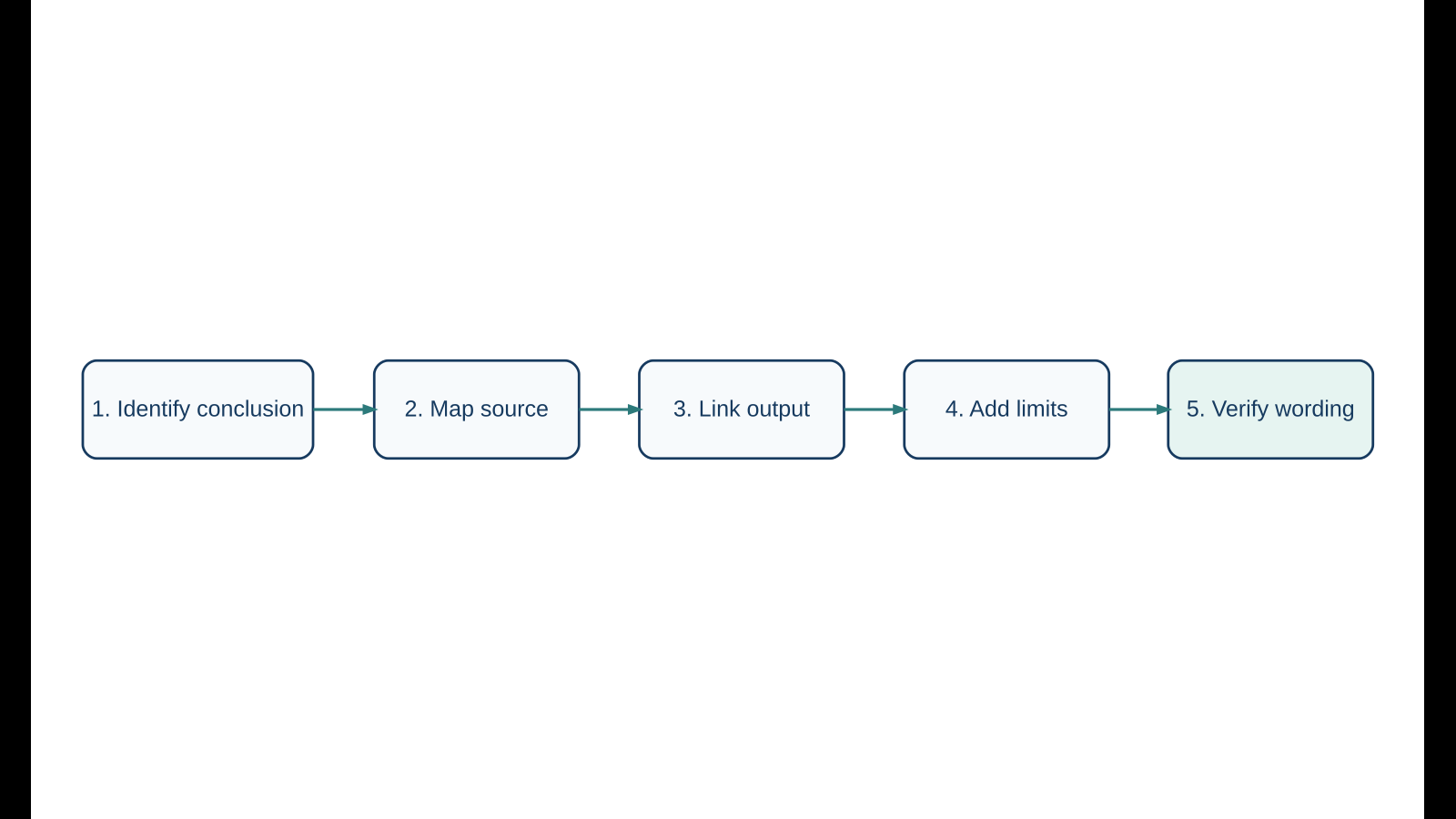
1. Create traceability at the level of material conclusions
Use the matrix for conclusions that affect safety, efficacy, benefit-risk, labeling, dose, population, or regulatory strategy. Routine background statements do not need the same control unless they are decision-critical.
For sponsors that need hands-on support applying this framework, BioBoston CRO Safety and Efficacy Summaries can support the underlying regulatory and cross-functional work.
2. Separate source evidence from interpretation
| Layer | Example |
|---|---|
| Source | Study report, dataset, analysis specification |
| Output | Table, listing, figure, pooled analysis |
| Interpretation | What the output means for the integrated question |
| Regulatory use | Where the conclusion appears in Module 2, Module 5, briefing material, or labeling rationale |
3. Use version fields aggressively
- Record dataset or report version.
- Record the analysis output version.
- Record the summary draft version when the conclusion first appears.
- Reopen the row if a later data cutoff or analysis changes the interpretation.
4. Add a qualification field
A conclusion that is technically correct can still be misleading if its boundary is missing. Record population limits, study-design constraints, duration limits, missing-data considerations, or other conditions that should travel with the conclusion.
5. Governance rules
- One row owner for every material conclusion.
- No “verified” status without a traceable source.
- Late data changes trigger targeted re-review of dependent statements.
- Conflicting outputs are escalated rather than selectively cited.
- Approved summary wording is linked to the final evidence version.
6. Hypothetical example
| ID | Conclusion | Source | Output | Qualification | Status |
|---|---|---|---|---|---|
| EFF-014 | Treatment effect was consistent across pivotal studies | Study A CSR vFinal; Study B CSR vFinal | Integrated efficacy table 14.2.1 | Population and follow-up differed modestly; see consistency note | Verified |
Need help building traceability?
BioBoston CRO Safety and Efficacy Summaries support can include source mapping, integrated evidence planning, and independent traceability review.