regulatory submission plan template planning should help the sponsor make a controlled decision, not merely create another document. A reusable regulatory submission content-plan template for pharma, biotech, device, and diagnostic filings. It links each document to evidence, owners, dependencies, reviews, and publishing status.
Quick answer: what columns should the plan contain?
| Field | Purpose |
|---|---|
| Content ID / module | Stable identifier and filing location |
| Document / deliverable | Exact content item |
| Owner / reviewer | Accountability and review path |
| Source inputs | Evidence needed before drafting |
| Dependencies | What can block the item |
| Draft / review / approval dates | Controlled review sequence |
| Publishing status | File and technical readiness |
| Risk / decision | Open issue affecting filing date |
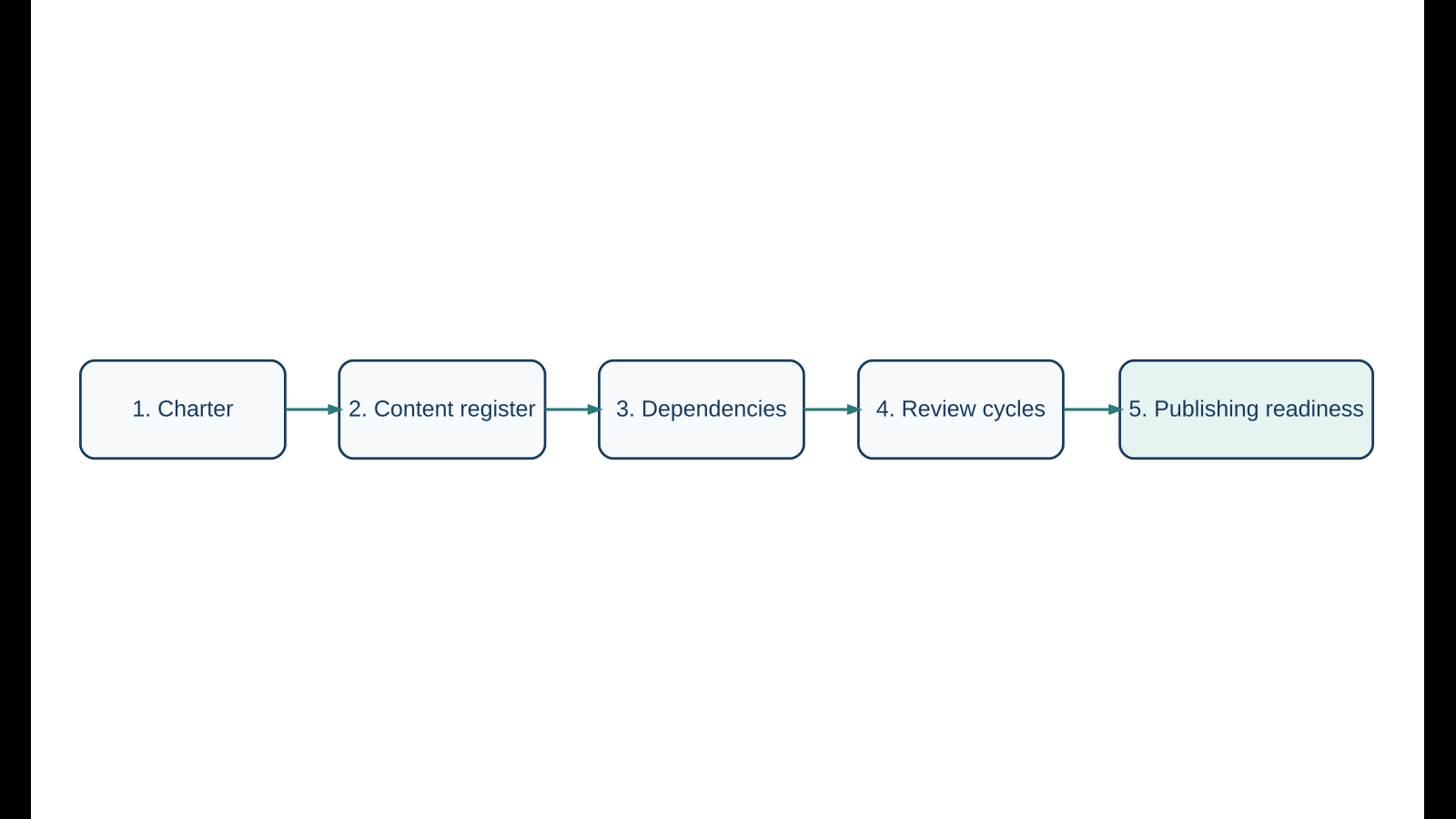
1. Start with a one-page submission charter
- Authority, application type, product, indication, and region.
- Target filing date and development decision it supports.
- Current regulatory assumptions and prior authority feedback.
- Submission leadership and final decision rights.
- Key constraints: evidence, manufacturing, clinical, vendor, budget, or timing.
2. Build the content register from the pathway
The content plan should reflect the specific application type and product. Avoid copying a generic document list and then trying to fit the program into it. Use the regulatory pathway and current technical requirements to define the actual content inventory.
For sponsors that need hands-on support applying this framework, BioBoston CRO Submission Planning can support the underlying regulatory and cross-functional work.
3. Model dependencies
| Dependency type | Example |
|---|---|
| Evidence | Clinical summary waits for final analysis |
| Decision | Labeling section waits for indication wording |
| Cross-document | IB update depends on new safety interpretation |
| Publishing | Final PDF/XML cannot be validated while content is changing |
| External | Vendor report or manufacturing data release |
4. Use review cycles with a purpose
- Scientific review resolves content and interpretation.
- Regulatory review tests alignment with strategy and authority expectations.
- QC verifies accuracy and cross-document consistency.
- Final approval authorizes the controlled version.
- Publishing review verifies technical placement and submission integrity.
5. Add a risk column that changes the plan
A risk field is useful only if it can trigger action. Record likelihood, impact on the filing date or regulatory position, owner, mitigation, and the date by which the risk must be resolved or accepted.
6. Template governance
- Update the plan at a defined cadence.
- Do not overwrite baseline dates without recording the reason.
- Use one source of truth for document status.
- Separate “draft complete” from “approved” and “published.”
- Escalate dependency changes that move the critical path.
Need help building the plan?
BioBoston CRO Submission Planning can support content inventory, responsibility mapping, dependency management, and filing readiness.