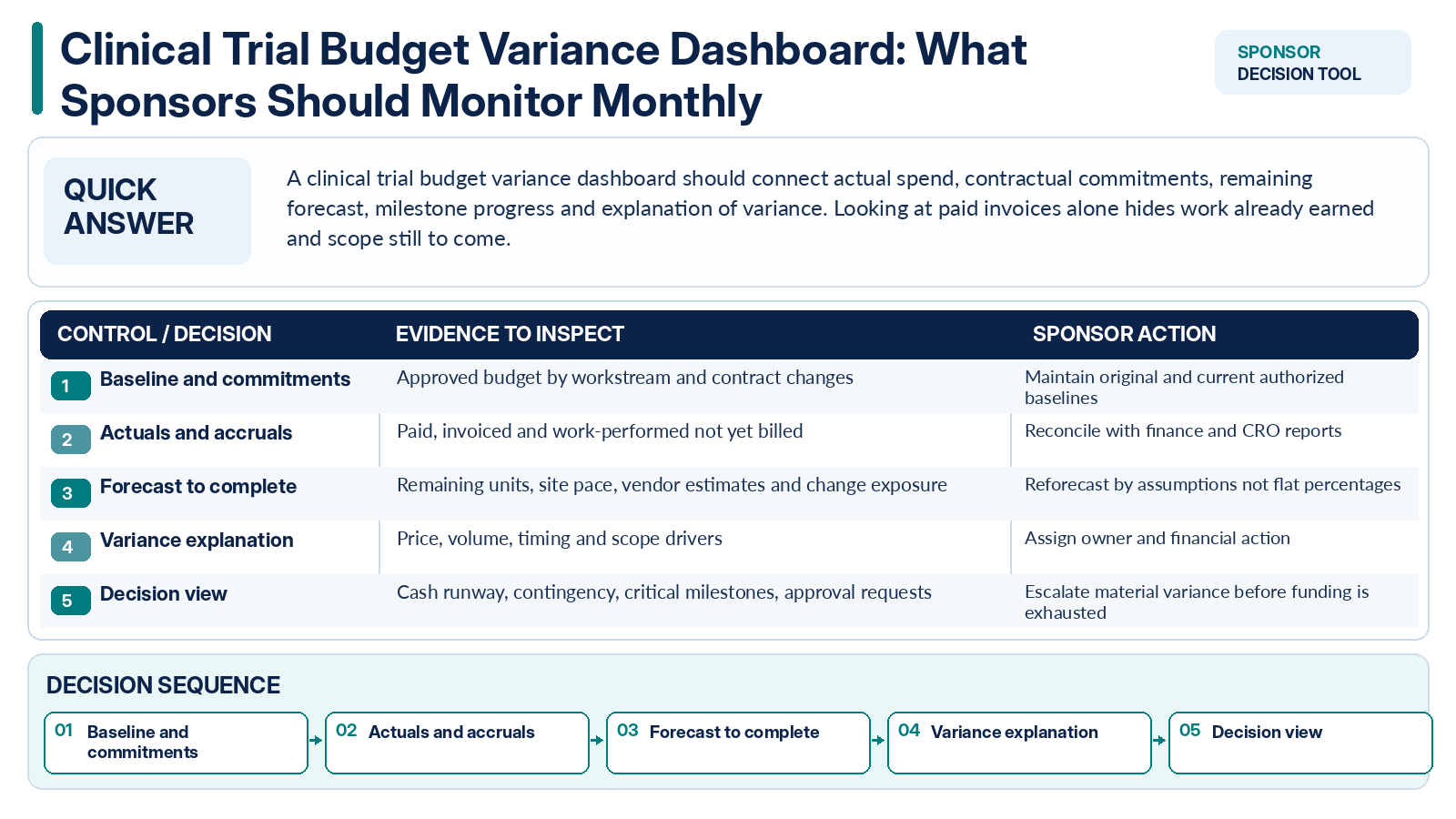
A clinical trial budget variance dashboard should connect actual spend, contractual commitments, remaining forecast, milestone progress and explanation of variance. Looking at paid invoices alone hides work already earned and scope still to come.
Reusable decision and evidence template
Begin with the most consequential control and the evidence needed to resolve it. The following matrix connects each decision to records and an accountable action, rather than treating the list as a generic compliance checkbox.
| Control / question | Evidence to examine | Sponsor action |
|---|---|---|
| Baseline and commitments | Approved budget by workstream and contract changes | Maintain original and current authorized baselines |
| Actuals and accruals | Paid, invoiced and work-performed not yet billed | Reconcile with finance and CRO reports |
| Forecast to complete | Remaining units, site pace, vendor estimates and change exposure | Reforecast by assumptions not flat percentages |
| Variance explanation | Price, volume, timing and scope drivers | Assign owner and financial action |
| Decision view | Cash runway, contingency, critical milestones, approval requests | Escalate material variance before funding is exhausted |
For teams that need support implementing this across functions, BioBoston CRO Budget Tracking can help adapt the controls to the study, vendors, and decision calendar.
Working through the controls
1. Baseline and commitments
Evidence: Approved budget by workstream and contract changes. Decision: Maintain original and current authorized baselines. Record the responsible function and the approved source version, and keep any remaining exceptions visible to the sponsor before this item is closed.
2. Actuals and accruals
Evidence: Paid, invoiced and work-performed not yet billed. Decision: Reconcile with finance and CRO reports. Record the responsible function and the approved source version, and keep any remaining exceptions visible to the sponsor before this item is closed.
3. Forecast to complete
Evidence: Remaining units, site pace, vendor estimates and change exposure. Decision: Reforecast by assumptions not flat percentages. Record the responsible function and the approved source version, and keep any remaining exceptions visible to the sponsor before this item is closed.
4. Variance explanation
Evidence: Price, volume, timing and scope drivers. Decision: Assign owner and financial action. Record the responsible function and the approved source version, and keep any remaining exceptions visible to the sponsor before this item is closed.
5. Decision view
Evidence: Cash runway, contingency, critical milestones, approval requests. Decision: Escalate material variance before funding is exhausted. Record the responsible function and the approved source version, and keep any remaining exceptions visible to the sponsor before this item is closed.
Red flags that should change the plan
- Variance from paid invoices only.
- Percent-complete guesses.
- Unapproved changes hidden in reforecast.
Decision gate and governance
At each monthly review separate timing variance from true projected overspend and record the next management action. The control owner should record the decision, evidence version, date, residual uncertainty and next re-review trigger. Where delegated providers perform the work, the sponsor should retain the relevant oversight and acceptance evidence.
Scope note: The planning and budget fields above are sponsor-side operating recommendations. They are not FDA-prescribed schedules, prices, or numeric thresholds.
Need practical support?
Use BioBoston CRO Budget Tracking to review the evidence, define decision rights, and build a study-specific action plan for the next milestone.