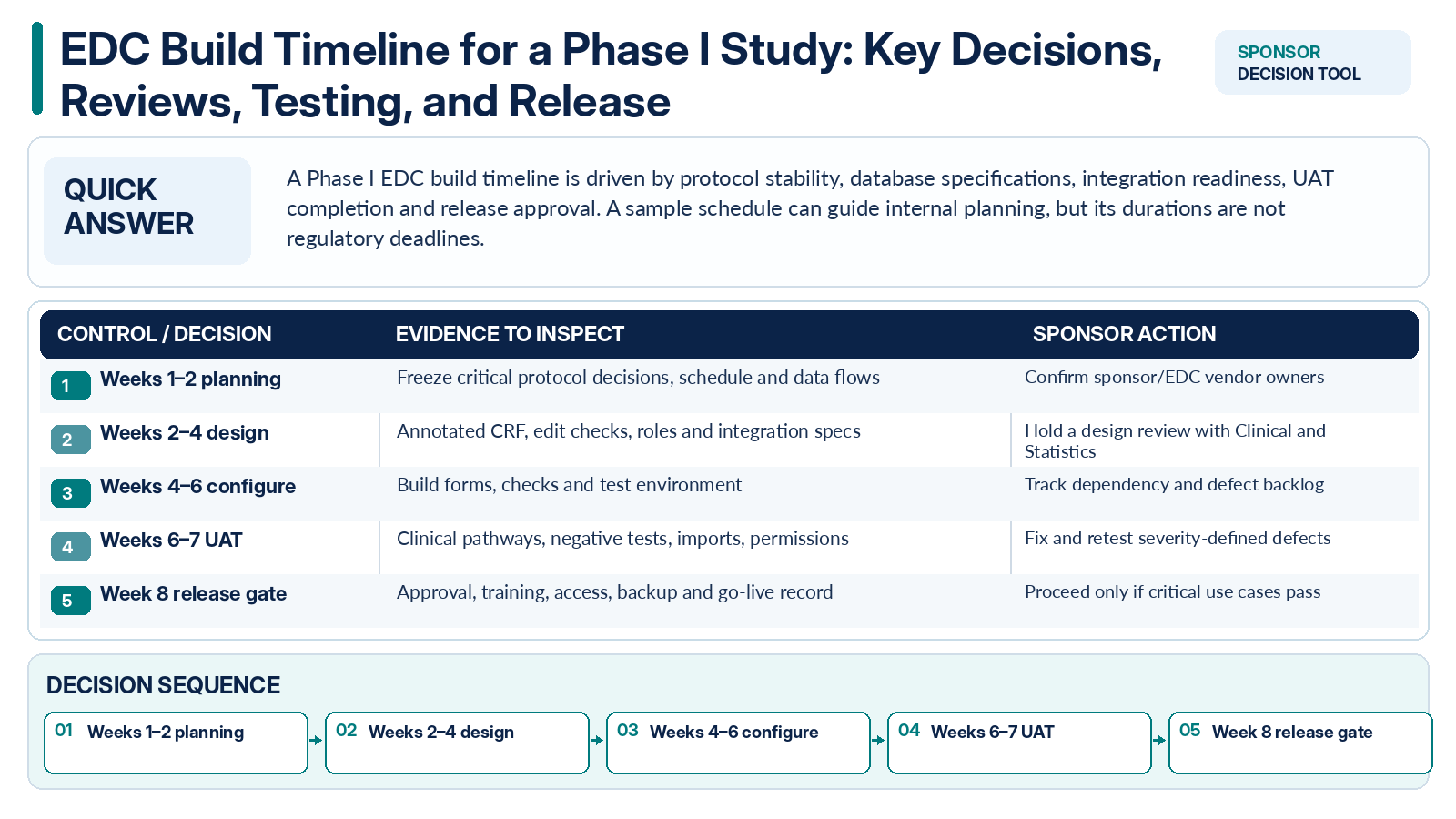
A Phase I EDC build timeline is driven by protocol stability, database specifications, integration readiness, UAT completion and release approval. A sample schedule can guide internal planning, but its durations are not regulatory deadlines.
Sponsor timeline and decision checkpoints
Begin with the most consequential control and the evidence needed to resolve it. The following matrix connects each decision to records and an accountable action, rather than treating the list as a generic compliance checkbox.
| Control / question | Evidence to examine | Sponsor action |
|---|---|---|
| Weeks 1–2 planning | Freeze critical protocol decisions, schedule and data flows | Confirm sponsor/EDC vendor owners |
| Weeks 2–4 design | Annotated CRF, edit checks, roles and integration specs | Hold a design review with Clinical and Statistics |
| Weeks 4–6 configure | Build forms, checks and test environment | Track dependency and defect backlog |
| Weeks 6–7 UAT | Clinical pathways, negative tests, imports, permissions | Fix and retest severity-defined defects |
| Week 8 release gate | Approval, training, access, backup and go-live record | Proceed only if critical use cases pass |
For teams that need support implementing this across functions, BioBoston CRO EDC Build and Database Design can help adapt the controls to the study, vendors, and decision calendar.
Working through the controls
1. Weeks 1–2 planning
Evidence: Freeze critical protocol decisions, schedule and data flows. Decision: Confirm sponsor/EDC vendor owners. Record the responsible function and the approved source version, and keep any remaining exceptions visible to the sponsor before this item is closed.
2. Weeks 2–4 design
Evidence: Annotated CRF, edit checks, roles and integration specs. Decision: Hold a design review with Clinical and Statistics. Record the responsible function and the approved source version, and keep any remaining exceptions visible to the sponsor before this item is closed.
3. Weeks 4–6 configure
Evidence: Build forms, checks and test environment. Decision: Track dependency and defect backlog. Record the responsible function and the approved source version, and keep any remaining exceptions visible to the sponsor before this item is closed.
4. Weeks 6–7 UAT
Evidence: Clinical pathways, negative tests, imports, permissions. Decision: Fix and retest severity-defined defects. Record the responsible function and the approved source version, and keep any remaining exceptions visible to the sponsor before this item is closed.
5. Week 8 release gate
Evidence: Approval, training, access, backup and go-live record. Decision: Proceed only if critical use cases pass. Record the responsible function and the approved source version, and keep any remaining exceptions visible to the sponsor before this item is closed.
Red flags that should change the plan
- Announcing first-patient-in before protocol is testable.
- External vendor not available during UAT.
- Treating change requests as free of regression risk.
Decision gate and governance
Reforecast based on unresolved critical-path inputs rather than forcing a nominal eight-week target. The control owner should record the decision, evidence version, date, residual uncertainty and next re-review trigger. Where delegated providers perform the work, the sponsor should retain the relevant oversight and acceptance evidence.
Regulatory note: Applicable regulations, trial commitments and agreements must be distinguished from nonbinding FDA and ICH guidance. Apply this framework to the actual product, jurisdiction and study.
Need practical support?
Use BioBoston CRO EDC Build and Database Design to review the evidence, define decision rights, and build a study-specific action plan for the next milestone.